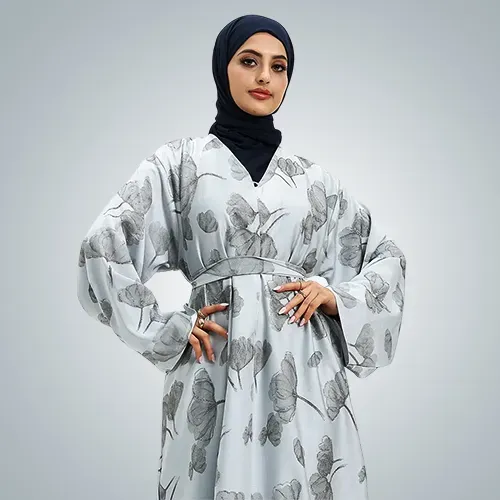
Naturally, our clothing choices become a little more purposeful as Ramadan approaches. Even basic outfit choices seem more intentional during this month for some reason. Although an abaya is already elegant when worn alone, the way you accessorise it can totally alter the atmosphere.
For everyday Ramadan clothing, the emphasis usually stays modest and subtle. Everything can look put together without looking forced if you wear a lightweight hijab in a colour that goes well with the abaya. During the day, delicate jewellery also looks stunning. Simple bracelets or small rings are frequently more than sufficient.
As evenings become more crowded with gatherings and iftars, accessories begin to play a slightly bigger role. Without detracting from the modest silhouette of the abaya, a textured hijab, a structured handbag, or even a statement cuff can enhance the entire ensemble.
For Eid, a lot of women naturally choose add-ons that feel more special – but don’t take this as a sign to overdo it. Actually, an ensemble is usually distinguished by its balance. If the accessories are kept simple, the design can take centre stage if the abaya has embellishments or details. A simple, flowing abaya can be brought to life with a striking accessory.
Although they are frequently overlooked, shoes are more important than we realise. An abaya can feel entirely different when you pair it with a stylish set of heels or sophisticated flats. Layering is no different.
The goal of accessorising is not to go overboard. It has to do with recognising the current mood. While Eid provides for celebration and a little more glitz, Ramadan days typically call for serenity and simplicity.
Your abaya should still feel like you at the end of the day. Accessories are meant to complement, not to overpower. When carefully selected, they give even the most understated look personality and purpose.


.webp "Black Jersey Jilbab")
.webp "Khaki Suede Feel Stretch Abaya")
.webp "Mocha Hawa Abaya")
.webp "Black Winter Crepe Essential Abaya")
.webp "Plum Plain Jersey Burkah")
.webp "Chocolate Plain Jersey Burkah and Skirt")
.webp "Black Inigo Girls Abaya")
.webp "Black Inigo Abaya")